Showing posts with label Piracy. Show all posts

Friday, 29 July 2016

Recent creation of EUROPOL's Intellectual Property Crime Coordinated Coalition (IPC3)


On 12 July 2016 EUROPOL’s headquarters in The Hague witnessed the launch of the Intellectual Property Crime Coordinated Coalition (IPC3).
This organization constitutes the EU’s response to offences against intellectual property and stems from the joining of the strengths of EUROPOL and the EUIPO in this area.


The IPC3 arose out of a strategic agreement between EUROPOL and the EUIPO signed in 2013. It has been incorporated into the current structure of EUROPOL and receives financial support from the EUIPO in the amount of 500,000 euros per year.

The organization provides technical and operational support for law enforcement agencies and other partners both inside and outside the EU by:
  • a) facilitating and coordinating cross-border investigations;
  • b) monitoring and reporting on trends in on-line offences and watching for the appearance of new modus operandi;
  • c) improving the harmonization and standardization of legal instruments and operating procedures to fight intellectual property crime globally;
  • d) reaching the public and law enforcement agencies by enhancing awareness and providing training in this specific area of knowledge. 

The creation of the IPC3 is more than warranted if we consider the impact of counterfeit or pirated goods within the EU, which account for 5% of imports with a total value of 85,000 million euros. The fight against offences of this nature has to be given priority in order to provide consumers with protection against dangerous or defective products and to tackle the organized criminal networks engaging in these illicit activities which are frequently also linked to other serious forms of transnational crime (smuggling, illegal immigration, labour exploitation, tax evasion, money laundering, financing terrorist activities, etc.).

The Joint Task Force Observatory EUIPO-INTA of INTA’s EU Anti-Counterfeiting Subcommittee, of which ELZABURU forms part, had for some time been strongly advocating the setting up of a specific organization within EUROPOL to combat crime of this nature.


Author: Juan José Caselles

Visit our website: http://www.elzaburu.es/en


Friday, 2 October 2015

Impact of counterfeiting in Spain's sporting goods sector third-highest in the EU

Spain ranks third among EU countries in which counterfeiting has the greatest impact on the sporting goods sector, at 15.7 % of sales, more than twice the EU average (6.5 % of sales), behind only Lithuania and Latvia. Nevertheless, in absolute terms the greatest impact is in France and Spain, these two countries accounting for one-third of lost sales due to counterfeiting in the EU, amounting to a total of 492 million euros.

These are the main conclusions with regard to Spain in the recent report entitled "The Economic Cost of IPR Infringement on Sports Goods", issued jointly by the OHIM's European Observatory on Infringements of Intellectual Property Rights and the European Patent Office. According to the report, total consumption of sporting goods in the EU in 2012 was estimated at 7,500 million euros, with 4,271 companies manufacturing products of this kind, employing 43,000 workers in the EU.

In addition to the direct repercussions of counterfeiting in the form of lost sales by lawful companies in the sporting goods sector, other economic sectors are also indirectly affected, suffering losses of 361 million euros. Government revenues are also impacted, with lost taxes (VAT, income taxes, corporate taxes, and social security contributions) estimated at 150 million euros. The direct and indirect impact of counterfeiting in this sector on the EU economy is estimated at around 850 million euros and 5,800 lost jobs.

The report takes into account only manufacturing of sporting goods and equipment as such (e.g., golf clubs, tennis rackets and balls, skis, etc.), excluding sports apparel and footwear, so the economic costs associated with the counterfeiting of sporting goods are in fact higher than those estimated by the report.


Visit our website: http://www.elzaburu.es/en

Wednesday, 19 August 2015

An end to unrestricted banking secrecy when investigating online sales of counterfeit goods

In its judgment of 16 July 2015 (Case C-580/13) the Court of Justice of the European Union (CJEU) placed limits on national laws protecting banking secrecy. In response to a request from Germany's Bundesgerichtshof (Federal Court of Justice) for a preliminary ruling on whether Germany's national banking secrecy law contravened Directive 2004/48/EC on the enforcement of intellectual property rights, the CJEU held that the Directive precluded a national provision which allows, in an unlimited and unconditional manner, a banking institution to invoke banking secrecy in order to refuse to provide the judicial authorities with information concerning the name and address of an account holder in the framework of proceedings dealing with the infringement of an intellectual property right.

In 2011 Coty Germany, exclusive licensees to the Community trademark for Davidoff Hot Water, purchased a bottle of perfume bearing that mark from an Internet auction platform and paid the purchase price into the seller's bank account with Stadtsparkasse Magdeburg. On observing that the perfume was counterfeit, Coty Germany asked the auction platform for the real name of the holder of the account from which the perfume had been sold under an assumed name. The party in question admitted to being the account holder but denied having sold the perfume and refused to furnish any additional information, relying on her right not to give evidence.

Coty Germany then asked the bank, Stadtsparkasse Magdeburg, to furnish the name and address of the holder of the bank account in which it had deposited the purchase price for the counterfeit perfume, but the bank refused to do so, invoking banking secrecy.

Coty Germany therefore instituted civil proceedings with the Landgericht Magdeburg (Regional Court, Magdeburg), which ordered the Stadtsparkasse to supply the information requested. This order was overturned by the Oberlandesgericht Naumburg (Higher Regional Court, Naumburg), ruling that under German civil law the bank was entitled to refuse to give evidence in civil proceedings. Coty Germany appealed this decision to the Bundesgerichtshof (Federal Court of Justice), which stayed the proceedings and referred a question to the CJEU for a preliminary ruling.

The question highlights the need to reconcile the right to an effective remedy and the right to intellectual property, on the one hand, and the right to protection of personal data, on the other.

Essentially the CJEU has held that, taken in isolation, the provision of national law that allows unlimited refusal by a banking institution to furnish information concerning the name and address of an account holder who engages in activities infringing an intellectual property right, inasmuch as the wording of the provision contains no condition or qualification, is liable to frustrate the fundamental right to an effective remedy and the fundamental right to intellectual property by preventing the competent national authorities from ordering the release of personal data pursuant to Article 8.1 of the above-mentioned Directive.

This ruling furnishes explicit support for national laws ensuring a fair balance between the different fundamental rights in question and clearly places limits on banking secrecy in investigations of cases of infringement of intellectual property rights. Given the invisibility available to sellers of counterfeit goods on the Internet, identifying the holder of the bank account into which payments are made can be critically important – in many cases the only way to uncover an infringer. The CJEU's ruling can be expected to have greater impact on civil matters in Spain, since it limits the banking secrecy that can be invoked in civil proceedings, and less on criminal matters, in which examining judges already enjoy broad powers to investigate crimes and set aside fundamental rights. In any case, the ruling is a big step forward in being able to combat the runaway scourge of sales of counterfeit branded goods on the Internet.


Visit our website: http://www.elzaburu.es/en

Thursday, 28 May 2015

World Anticounterfeiting Day

This coming 2 June is World Anticounterfeiting Day in a number of countries around the world. To mark the occasion, for the fifth consecutive year the Spanish Patent and Trademark Office and the National Brand Owners' Association are holding, in cooperation with the Finance Ministry and the various national Police Forces, a special day to raise awareness and sensitize the citizenry about the adverse repercussions caused by the manufacture and sale of counterfeit goods.

This year's event will take place in the city of Vigo. The choice of city is far from arbitrary but rather is the upshot of a police anticounterfeiting and antipiracy operation carried out at Vigo's "A Piedra" market in October 2014. And that's not all. Vigo and its market, famous for selling counterfeit goods, merited a mention on the US Trade Representative's international blacklist in February 2014, which specifically noted the city's status as a port of call for many cruise lines and the market's operation "under the supervision and control of the municipal government".

The choice of Vigo as the city in Spain to hold World Anticounterfeiting Day, then, could not be more apt. One would hope that holding World Anticounterfeiting Day there will indeed help open the eyes of local government officials to the need to combat this type of criminal activity more effectively to take their city off this shameful blacklist.


Visit our website: http://www.elzaburu.es/

Thursday, 29 May 2014

New customs agreement between the EU and China: What does it mean for trademark owners?


Silk Market Beijing
(by gruntzooki via Flickr)
China and the EU have signed a landmark mutual recognition agreement on customs cooperation. Its main goal is making the customs procedures easier, cheaper and faster for trusted traders. Two other initiatives which complement this agreement have also been signed, namely a new Strategic Framework for Customs Cooperation and a new EU-China Action Plan on Intellectual Property Rights.

The “trusted traders”, also known as “Authorized Economic Operators”, have been present under EU customs regulations since 2008 and enjoy simplified customs procedures if they manage to prove that they are safe, reliable and compliant with security standards. In other words, the trusted traders go through fewer and quicker customs checks when entering or exiting the European Economic Area (EEA).

China is not the first country to sign such an agreement with the EU; there are mutual recognition agreements already signed with countries such as the US (2012) and Japan (2011), but the addition of China makes the EU certified trader system the most widely accepted in the world since there are currently around 15,000 companies listed as safe traders (for more information see the European Commission's press release here).

There is a more important point to be considered though. China has a reputation of a country where a lot of infringements of IPRs are being committed every day. However, on 1st May 2014 a new Trademark Law has come into force (for details on the amendments, see our previous blog post here) which is supposed to strengthen the protection of trademark owners against infringements and bad faith applications. We are still to see how exactly it will be implemented in practice, but the combination between the new Trademark Law and the recently signed customs agreement, definitely means good news for trademark owners!

Our experience in China has proven that European trademark owners sometimes have more problems with trademark squatters rather than infringers. The reason behind this is simple – the widely established practice of European trademark owners to manufacture their goods in China without registering their trademarks there and later sell them on the European market. What happens then? A Chinese company simply goes to the SAIC and registers the European trademark without any problem since the Chinese trademark system is a first-to-file one. Then, they also register the trademark with the Chinese customs (GAC) and when the European owner tries to send his/her next shipping to Europe, the goods are stopped at customs for infringing a Chinese registered trademark. From here onwards, there are basically two options and neither of them is good – pay a subordinate amount of money to buy our own trademark or go to court / TRAB.

Maybe the most common route chosen by European trademark owners is to try to cancel the said registration on grounds of bad faith or non-use after the first three years from registration. In this case, the biggest problem faced by the rightful owner is to prove the use or at least some influence of the trademark on the Chinese market. However, this is quite difficult if not impossible, because manufacture only for export is not usually considered as actual use of the trademark (there is no precedent in Chinese judicial system, so Chinese courts are not obliged to follow previous decisions even if there are such) and only extremely famous trademarks have been recognized by the courts when they had not been used on the Chinese market.

With the strengthening of the good faith requirement in trademark registration and use by the new Chinese Trademark Law and the mutual recognition agreement with the EU, the cases  mentioned above should decrease. Not only because of the protections offered by the Law, but also because the enhanced customs cooperation will ease the fight against squatters by recognizing the European safe traders in China and maybe motivate EU companies to register their trademarks in the country in order to be fully protected. This way, Chinese customs will be able to dedicate much more resources to the high-risk traders and fight against infringements more efficiently.

While the Chinese IP-related legislation and the actions of the authorities is improving more and more every time, we should be conscious of the dangers that still exist and align our IP strategy in accordance to them. For the common person living in China, the efforts of the Chinese authorities are almost invisible, which once again shows the scale of the infringements and the enormous amount of resources and time which have to be put into this fight. If a trademark owner is manufacturing, using or planning to use his/her trademark on the Chinese market, his rights should better be registered before starting any commercial or other activity in China. In case the owner has already entered the Chinese market, it is highly advisable to register the trademarks as soon as possible.   


Author: Geri Dimitrova,

Visit our website: http://www.elzaburu.es/

Monday, 3 March 2014

End of the road for counterfeiting goods in transit in the EU

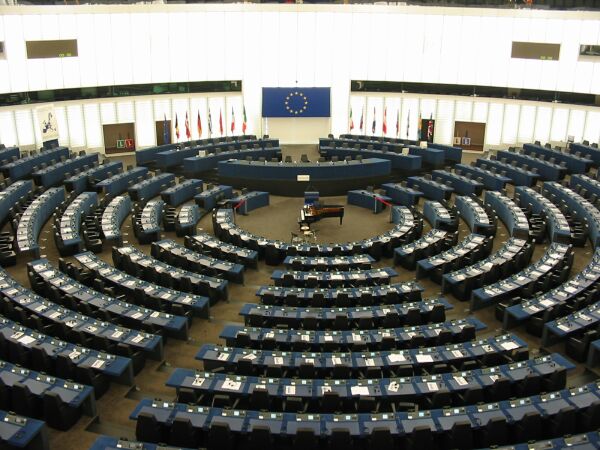
European Parliament
By Cédric Puisney
(via Wikipedia)

On 25 February 2014 the European Parliament gave its approval to the Proposal for a Directive of the Parliament and of the Council to approximate the laws of the Member States relating to trade marks (recast).

The interesting new provisions contained in the proposal include certain measures which numerous organizations and enterprises across a broad range of sectors have long been calling for, in that they are intended to put an end to the freedom of transit of counterfeit goods through the customs territory of the EU even when those goods are destined for a country outside the Union. The measures approved in this regard are, specifically, the following:

1. The holder of the trademark right may prevent goods coming from third countries and bearing a counterfeit trademark from entering EU territory.

2. The holder of the right may take appropriate legal steps and actions against counterfeit goods. These include the right to request national customs authorities to implement measures to detain and destroy such goods under the new customs Regulation (EU) No. 608/2013.

3. The holder of the right may also prevent the entry into the EU of small consignments of counterfeit goods, particularly in the context of sales over the Internet. 

A small consignment is defined in Regulation (EU) No. 608/2013 as a postal or express courier consignment containing three units at most or having a gross weight of less than 2 kg.

Parliament proposes that in these cases the individuals or entities who ordered the goods should be notified of the reason why the measures have been taken and similarly be informed of their legal rights vis-à-vis the consignor.

The provisions thus approved in connection with small consignments follow on from the recent judgment of the Court of Justice in case C-98/13, published on 6 February 2014, in which it was held that, even where the sale of goods for own use had taken place through a website in a non-member country, the holder of the intellectual property right could not be deprived of the protection afforded by the customs regulation and the consequent power to prevent those goods from entering the European market, without there being any need first to ascertain whether the goods had previously been the subject of an offer for sale or advertising targeting European consumers.

In conclusion, the European Parliament has taken a great step forward in the fight against counterfeiting on all fronts and not just inside its territory.

Autor: Transi Ruiz

Visite nuestra página web: http://www.elzaburu.es/

Wednesday, 26 February 2014

INTERPOL and EUROPOL: efficacy against counterfeiting

INTERPOL Headquarters
By Massimiliano Mariani (via Wikipedia)

Through Operation Opson III INTERPOL and EUROPOL have once again become the scourge of the organized crime networks behind counterfeiting at the transnational level.

Within the framework of the operation, reported by EUROPOL on 13 February 2014, thousands of tonnes of foodstuffs and hundreds of thousands of litres of drinks, all counterfeit or unregulated and potentially harmful, were seized. The actions extended to 33 countries throughout Europe, America and Asia and were carried out with the aid of national police forces, private sector organizations and customs authorities. The operation was the third in a series launched by INTERPOL and EUROPOL in 2011 under the codename “Opson”  (meaning “food” in ancient Greek) which is aimed at combating illicit trade in counterfeit foodstuffs at the transnational level and has so far resulted in the arrest of over three hundred people and the seizure of vast amounts of goods to the value of hundreds of millions of dollars. This series of blows to the organized crime networks bears witness to the extraordinary organizational and operational capacity of INTERPOL and EUROPOL and to the commendable coordination of the police forces of the different countries.

The work performed by INTERPOL in the intellectual property field is particularly noteworthy. In 2012 it set up a programme against trafficking in illicit goods and counterfeiting with a view to improving transnational cooperation in this area between the security forces of the member States. INTERPOL rates offences against intellectual property to be highly damaging to the whole of global society and highlights the increasingly preponderant role of international mafias, to which this Blog in turn referred in a previous post.

Although the figures on the growth in worldwide traffic in counterfeit goods are dismaying, the increased effectiveness of operations undertaken against it by these Community and international police forces are to be highlighted. In 2012 INTERPOL launched Operation Maya in various Central and South American countries, where over 1,000 police interventions took place and 200 arrests were made, and Operation Black Poseidon in Eastern Europe entailing over 1,700 interventions and the seizure of goods to the value of 122 million euros. EUROPOL, for its part, conducted Operation Leatherface, which resulted in the dismantling in various provinces of Spain of a  transnational network connected with the Camorra and engaging in illicit trade in counterfeit goods. In Operation Pangea INTERPOL and EUROPOL worked together, with the assistance of other public and private sector bodies, to dismantle a network involved in the online sale of counterfeit pharmaceuticals. In the course of that operation 58 people were arrested and 9.8 million items of goods, which would have had a market value of 41 million dollars, were seized.

The third phase of Operation Opson, which exemplifies the spirit of cooperation and capacity for coordination of INTERPOL and EUROPOL, is still ongoing. Thanks to this work consumers and trademark owners are safer, while international criminals are more uneasy.

By Eyehook
(via Wikimedia)
In Spain ELZABURU is involved, within the framework of Operation Opson III, in the pursuit of a criminal organization engaging in the production and distribution of counterfeit French champagne originating in Italy. EUROPOL is working on the investigation.

Wednesday, 12 February 2014

Can an EU resident purchase a counterfeit product from a Chinese online sales website, even if it is for private use?

By Frank Williams
Vía Wikipedia

The user will certainly be able to buy it. But may never end up receiving it: on entry of the counterfeit product into the EU territory the Regulation relating to the seizure by customs authorities of goods suspected of infringing intellectual property rights will be applied and, as a result, the counterfeit product will be seized and, as the case may be, destroyed.

This is the judgment handed down by the Court of Justice (Second Chamber) in case C-98/13, which was just published on 6 February 2014.

The facts of the case date back to January 2010 when a Danish citizen (Mr. Blomqvist) bought a Rolex watch from a Chinese online sales website and paid for it through the same website. The parcel was sent from Hong Kong to the address of Mr. Blomquvist in Denmark, but was seized by the Danish customs authorities pursuant to EC Regulation no. 1383/2003, which was in force at the time, on grounds of infringement of the industrial and intellectual property rights of the rightholder, Rolex. The Danish importer opposed the destruction of the watch on the grounds that he had bought it lawfully for his own personal use.

The Court of Justice ruled that, although the sale of the goods occurred through a website located in a country outside of the EU, the holder of the industrial and intellectual property rights cannot be denied the protection afforded to that holder by the customs regulation and that, as a result, the counterfeit goods must be prevented from entering the EU territory. It is not necessary to check whether the goods have previously been the subject of an offer for sale or advertising targeting European consumers, because the sale has been accredited.

Consequently, this judgment represents a serious warning to those purchasing goods online: counterfeit goods purchased from websites outside of the EU can be seized and destroyed when they enter EU territory, irrespective of the use made of them.


Visit our website: http://www.elzaburu.es/

Wednesday, 29 January 2014

Financing villainy: the relationship between counterfeit goods and organized crime


Under the title “Look behind”, on 14 January the United Nations Office on Drugs and Crime (UNODC) launched a public awareness campaign aimed at highlighting the close global relationship between organized crime and piracy and counterfeiting of goods. The campaign is based on an advertising spot that premiered on the NASDAQ screen in New York's Times Square, subsequently to be broadcast via the most influential media in the more than ten languages into which it has been translated. By investments of this kind, the UN is showing that it is ever more aware of the danger posed by piracy and counterfeiting, as well as the repercussions of these activities on society and its members.

The counterfeiting business moves billions of dollars around the world every year, a fact that is not lost on the international networks of organized crime. Countless criminal organizations have been associated with this type of illicit trafficking, and their relationship with these activities has been duly proven. Italian groups such as the Cosa Nostra or the Neapolitan Camorra, as well as the Russian Mafia, have been linked to counterfeit goods trafficking in operations conducted by INTERPOL in Latin America and by Europol in Europe. In Asia, where the manufacture of very low-quality goods bearing third party distinctive signs is astonishingly simple to carry out in view of the low production costs, groups such as the Japanese Yakuza and the Chinese Triads dominate these production and distribution processes, with capacity to expand operations throughout the world.

Bodies such as INTERPOL have warned that the web of an international criminal organization often lies behind the counterfeit market, and the profits made by this illicit trade serve to finance other crimes such as human trafficking, money laundering and drug trafficking. The low penalties handed out for crimes against industrial property only serve to encourage organized crime groups to participate in what is a multi-million dollar market (the benefits of which might even exceed those of drug trafficking) and for which criminal punishment in the event of conviction is ludicrous compared to the potential profits to be gained. 
By Frank Schwichtenberg
Vía Wikimedia
Trafficking of counterfeit goods is closely linked to the following crimes:


·   Money laundering. Criminals use counterfeiting to launder money obtained from their various illicit activities. By introducing these goods into regular distribution channels, passing them off as originals through supposedly legitimate businesses, they are able to ensure that any profit has been properly laundered by the time it reaches the bosses of these groups.

·   Labour exploitation. As mentioned in the campaign's spot, the mafias engaged in counterfeiting activities take advantage of the situations in developing countries to produce goods of this type there. Working in conditions that are more than precarious for ridiculously low or non-existent wages over the course of interminably long hours is the daily reality for thousands of people (many underage) who are exploited by these criminal groups in factories.

·   Extortion and bribery. With a view to facilitating the flow of illicit items across different countries, these organisations habitually resort to bribery or corruption of however many individuals may be necessary. Extortion and threats to distributors and retailers alike who do not wish to "cooperate" are another feature of crimes against industrial property.

·   Fiscal crimes (tax fraud). According to figures released by the Organization forEconomic Cooperation and Development (OECD), the value of the counterfeit goods traded globally each year amounts to around 250,000 million dollars, a figure that evades government coffers and reaches criminal organisations in its entirety.

Although industrial property crime still enjoys a certain degree of social tolerance and is considered a "minor" crime, there is no doubt that it also represents a serious risk to consumer health. Buying counterfeit goods is not a simple and innocuous way of saving money without repercussions for the rest of society; rather, it actively contributes to the financing of organized crime, it encourages the continued exploitation of workers slaving away in factories, and it serves to fatten the wallets of the "capos". Unlike other activities by international mafias, trafficking in counterfeit goods has the advantage of exponentially multiplying the number of potential consumers, in that the activities are not directed at a handful of poor wretches, African warlords, or terrorist groups. They are directed at people who are perfectly normal and have no connection whatsoever with any type of criminal activity, taking advantage of their blindness to the damage that purchasing these items causes both to themselves and to all the victims behind the trade. This is why the public needs to be made aware of all that lies on the other side of counterfeit goods and, once again, to look behind.


Visit our website: http://www.elzaburu.es/

Friday, 24 January 2014

CJEU rules legal the technological measures preventing the use of homebrews on Nintendo consoles


The CJEU yesterday handed down a judgment (case C-355/12) resolving a request for preliminary guidance in a dispute that has arisen in Italy between the companies Nintendo and PC Box. The roots of the conflict were PC Box’s manufacture and sale of devices which, once installed in a Nintendo video game console, allow users to circumvent the piracy protection system and use counterfeit games. PC Box created the so-called homebrews expressly for use with Nintendo game consoles, and their aim is to deactivate technological protection measures so that consumers can play games by other manufacturers, listen to MP3s, and watch movies and videos.

The Italian court referred two questions to the CJEU. Firstly, whether the technological protection measures installed by Nintendo into its consoles to prevent the use of third-party programs, games and other content is in conformity with Community legislation, and, specifically, whether the concept of an effective technological measure set out in article 6 of EC Directive 2001/29 is applicable thereto. And, secondly, which criteria should be applied to evaluate the scope of legal protection against circumvention of effective technological protection measures.

(i) The first question is not without relevance, since the technological measures adopted by the complainant consist of an encryption system installed in the consoles and video games that prevents the use of video games lacking the encrypted code as well as the use of any other type of software, such as that aimed at reading MP3 files, videos or movies. According to PC Box, such technological measures go beyond the scope of the Directive, which excludes any type of interoperability between the console and equipment other than that of the company which produces the system. Recital 48 of the Directive states in this regard that the legal protection provided in respect of technological measures “should respect proportionality and should not prohibit those devices or activities which have a commercially significant purpose or use other than to circumvent the technical protection.”

Nintendo 3DS AquaOpenConsole
By Evan-Amos
Via Wikimedia Commons

However, according to the CJEU, there is nothing in EC Directive 2001/29 applicable to video games to suggest that Article 6.3 thereof does not refer to technological measures such as those used by Nintendo in its consoles. The concept of an effective technological measure is defined in a broad manner and also includes application of protection systems including encryption of the physical housing of video games such as the consoles themselves, which serves to prevent interoperability with equipment or devices lacking the encrypted code.

(ii) Secondly, the Italian court raises a question relating to the criteria or parameters in respect of which the scope of legal protection against the circumvention of technological protection measures should be assessed, and, specifically, whether account should be taken of the intended use attributed by the right holder to the product in which the protected content is inserted.

In this regard the Court holds that further to the said recital 48 of EC Directive 2001/29, the national court should take into account criteria such as the existence of other effective technological measures comparable to those adopted by the complainant, which would have caused less interference with the activities of third parties not requiring authorisation by the right holder, the costs of different types of measures, as well as other purposes of the devices used by the defendant aside from the circumvention of the technological measures and the frequency with which they are effectively used by third parties.

The fact is that a definite conclusion cannot be drawn from the CJEU’s judgment as to whether or not the homebrews manufactured and sold by PC Box are legal, since the assessment thereof is left in the hands of the national court depending on the proof of effective use provided by third parties. What has been clarified is that the concept of the effective technological measure set out in EC Directive 2001/29 also encompasses measures that serve to prevent the interoperability of a console with equipment, devices and software other than that of the company which produces the console.

By Maico Amorim
Via Wikimedia
Also of interest is the CJEU’s declaration relating to the legal definition of video games. In the Court’s opinion, video games constitute “complex matter”, comprising not only a computer program but also graphic and sound elements with a unique creative value, and should thus be protected by copyright together with the entire work, in the context of the system established by EC Directive 2001/29.


Visit our website: http://www.elzaburu.es/